Material Lifts
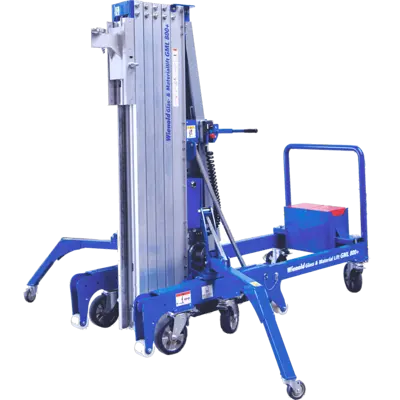
Wienold
Wienold GML 800+ 25/M Glass & Material Lift
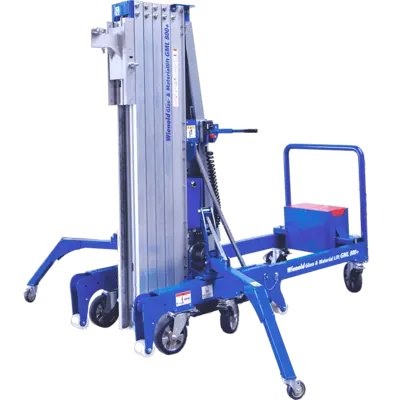
Wienold
Wienold GML 800+ 20/M Glass & Material Lift
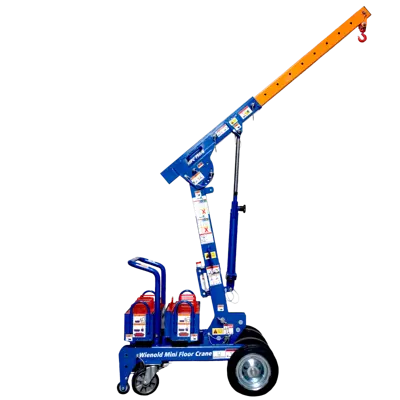
Wienold
Wienold MFC 750/K Mini Floor Crane
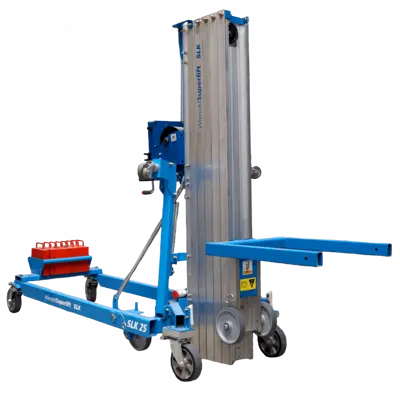
Wienold
Wienold SLK-15 Superlift
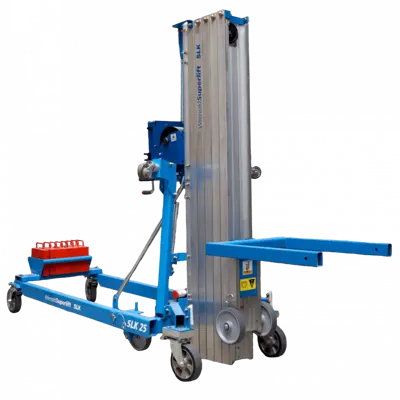
Wienold
Wienold SLK-10 Superlift
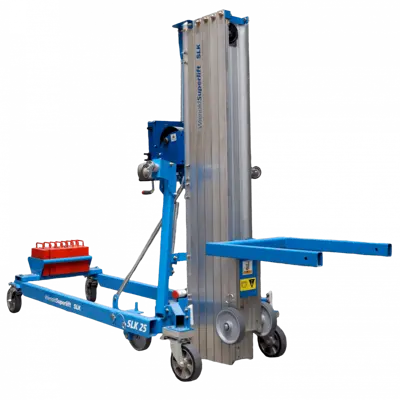
Wienold
Wienold SLK-25 Superlift
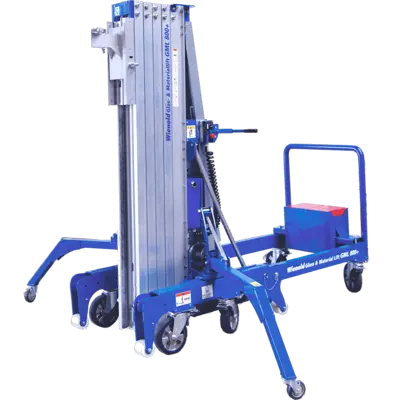
Wienold
Wienold GML 800+ 15/M Glass & Material Lift
Mechanical Lifts For Transporting Heavy Items & Materials
Material lifts typically consist of a sturdy platform or carriage that can accommodate the desired load, along with a vertical mast or tower system that supports and guides the platform during the lifting process. The lifts are equipped with various safety features such as guardrails, interlocks, and emergency stop buttons to ensure the well-being of operators and prevent accidents.
One of the primary advantages of material lifts is their versatility and adaptability to different environments. They can be installed indoors or outdoors, and their modular design allows for customization to meet specific requirements. Material lifts can be freestanding structures or mounted on walls, and they can be configured to have single or multiple access points, depending on the building layout and operational needs.
These lifts are commonly used in warehouses, manufacturing facilities, construction sites, hospitals, retail stores, and other settings where there is a need to move heavy loads efficiently and safely. They are particularly beneficial for tasks such as stock replenishment, equipment maintenance, construction material handling, and waste removal.
Material lifts offer several key benefits, including increased productivity, reduced risk of injury, and improved workflow. By mechanizing the lifting process, they minimize physical strain on workers and allow them to focus on more value-added tasks. Moreover, material lifts help optimize space utilization by enabling efficient vertical storage and eliminating the need for bulky ramps or staircases.
Depending on the specific application and load capacity requirements, material lifts can be powered by electricity, hydraulic systems, or pneumatic mechanisms. Some lifts may also feature additional functionalities such as adjustable heights, load sensing, or remote control operation, further enhancing their versatility and usability.
In conclusion, material lifts are indispensable tools for vertical transportation of heavy items in various industrial and commercial settings. With their robust construction, safety features, and adaptability, they contribute to improving operational efficiency, worker safety, and overall productivity.